


Design for a Vienna cafe in Blevedere Holiday Club
Design for Vienna cafe in Block 4 of de-luxe residential and recreation complex Belvedere Holiday Club in


Eagles Nest - Bansko
We are delighted to announce the release of Eagle's Nest - a stunning new development of highest specification in one of the best locations within Bulgaria's premier ski resort of Bansko. Eagle's Nest has all the facilities you would expect from a 4 star luxury hotel, comprising 31 apartments, a
01.3.2024
Bansko Skiing Zone Concessionaire Presents to Environment Minister Conceptual Design for New Ski Gondola
Sofia, January 4 (BTA) - Meeting with Environment Minister Neno Dimov and the Mayor of Bansko on Thursday, officials of Ulen, the company running the Bansko skiing zone, presented a conceptual design for a second...
 02.6.2023
The first 20 years Max Consult.BG Ltd., Congratulations!
 07.3.2023
UPDATED Bulgaria's First Floating Solar Power Plant Project Unveiled in Sofia
SOFIA,
07.03.2023 08:31 | UPDATED 07.03.2023 11:32
(BTA)
A major project for building Bulgaria’s first floating solar power plant was presented in Sofia on Tuesday.
Construction of the plant in the water area...
Weather/BNB fixing 23.11.26
 |
20° | Sofia |  |
21° | Plovdiv | ||||||
 |
20° | Burgas |  |
17° | Stara Zagora | ||||||
 |
21° | Varna | |
20° | Rousse | ||||||
|
|||||||||||


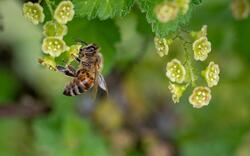
Romania – An Example of Flouting EU Ban on Bee-killing Insecticides
18.7.2022BUCHAREST, 18.07.2022 18:59 (BTA) Bee-keepers claim that Brussels is closing its eyes to a legal ‘super loophole’ that leaves banned seeds out in the fields. Nearly a decade after the European Union first restricted the use of seeds coated with bee-killing insecticides, Romania’s honeybees are still feeling the sting, the Politico writes. In one of the EU’s honey-production capitals, the government has been relying on the banned seeds to prop up its lucrative cash crop exports, something NGOs and beekeepers denounce as an egregious and routine violation of EU laws that is endangering one of the country’s most ancient trades and harming biodiversity. While the European Commission fully banned neonicotinoids, or neonics, in 2018 — after concerns about their impact on bees led to initial restrictions in 2013 — Romania’s Agriculture Ministry has routinely side-stepped the ban by resorting to an exemption mechanism in the EU’s main pesticide law designed as a last-resort measure to save an endangered harvest. Romania keeps circumventing the restrictions by arguing that neonics are the only effective means out there to protect crops from devastating bug infestations. But critics say the government is ignoring existing alternatives and granting all derogation requests submitted by powerful farm and agrichemical groups. In a 2017 report, three EU NGOs and Romapis, the Romanian federation of beekeeper associations, pinned Romania as the “EU champion” of neonic derogations, and called on the Commission to stop its “deliberate inaction” and challenge Bucharest’s “abuses,” as provided by EU law. But, five years on, no meaningful action has been taken because, at the EU level, no one is really watching. The issue is far from being unique to Romania. Virtually every EU country makes routine use of these so-called emergency authorizations to use the forbidden pesticides that keep their signature productions ticking over. France and Belgium’s continued neonic exemptions contribute to the EU’s stance as the world’s leading sugar beet producer; Spain, the EU’s fruit-growing champion, deploys them to allow farmers of popular crops like melons or strawberries to use 1,3-Dichloropropene, a fungicide so toxic that it never got EU approval; and countries like Denmark issue them to manufacture neonics for both EU and non-EU export. The situation is particularly damaging for Romanian beekeepers, as neonics have been used to grow sprawling fields of sunflower, corn and colza, all crops deemed highly attractive to pollinators. The use of the banned seeds, beekeepers argue, serves only the interests of a handful of powerful crop growers, and those of a government unwilling to give up its spot as one of the EU’s cereal-exporting giants.. The plight of Romania’s beekeepers further highlights how flagrant shortcomings in the European Commission’s abilities to enforce its own rules and to rein in an often barefaced readiness by countries to exploit regulatory loopholes, can render its lofty green rules toothless. In interviews with EU authorities, NGOs and Romanian beekeepers and farmers, the Politico found that a lack of resources and regulatory firepower — whether within the Commission’s executive units or within its chief scientific agency, the European Food Safety Authority (EFSA) — have entrenched this issue in a regulatory no-man's land, where countries are able to make unchecked use of a system meant for emergencies. The Commission declined requests for an interview, Politico writes. In written replies to questions from the same, it admitted EFSA lacked sufficient resources to “systematically verify” all derogations and confirmed that in Romania, the derogations are “granted upon request.” In a 2019 audit in Romania, it also identified staff and resource shortages as a "severe issue" hampering proper implementation of its pesticide rules. Romania’s farm ministry also declined an interview but, in a written answer, said the annual derogations were needed “because there are no alternatives.” It added that neonic use in colza stopped in 2019, after an EFSA report found alternatives existed. Martin Hojsik, a Slovak MEP working on pollinators, said the Romanian case laid bare a “super loophole” that showed “there is something really deeply rotten in the system". As the Commission pours considerable resources into a package of new laws to restore biodiversity and pursues a 2030 target to reverse rampant pollinator decline, its inability to enforce even the most straightforward of bans suggests it might be biting off more than it can chew. /MT/, BISTRA ROUSHKOVA, BTA Photo, source: https://www.bta.bg/en/news/balkans/298952-za-bistra-balkans-rumaniya-e-primer-za-nespazvane-na-zabranata-na-es-za-insekt
 Journalist Ivan Bakalov Presents Photo Exhibition \"Old Sozopol - 40 Years Ago\"
SOFIA, 18.07.2022 15:33 (BTA) Journalist and photographer Ivan Bakalov presents his memories of the seaside town of Sozopol dating 40 years back in a photo exhibition, which can be seen until July 25 at the...
 COVID-19 Restrictions to Be Introduced in Sofia City on July 19 for 30 Days
SOFIA, 18.07.2022 21:20 (BTA) COVID-19 restrictions will be introduced in Sofia City on Tuesday, July 19, to be effective for 30 days, by order of Sofia Regional Health Inspectorate Chief Dancho Penchev. Face...
 Newly Established Protected Area to Help Conserve Sturgeons
SOFIA, 06.07.2022 09:36 (BTA) A newly established protected area aims to preserve the habitats of critically endangered, endangered and vulnerable fish species. The Esetrite-Vetren section of the Danube is the...
 Most Metro Stations in Sofia with Secure Bike Parking
SOFIA, 06.07.2022 17:02 (BTA) From Wednesday, July 6, Sofia\'s residents can take advantage of around 550 secure parking spaces for bicycles. They are spread across 45 out of 47 underground railway stations in the...
 Culture Ministry to Fund Rehabilitation of Two Emblematic National Revival Houses in Tryavna
TRYAVNA, NORTH CENTRAL BULGARIA, 09.07.2022 15:59 (BTA) The Ministry of Culture is funding the rehabilitation of two of the most popular cultural sites in Tryavna visited by thousands of tourists each year. They...
 Green Mobile App Rewards Pedestrians in Sofia
SOFIA, 23.06.2022 18:17 (BTA) There is hardly a Sofianite today who is satisfied with the quality of air in the city. Sofia Coin, a mobile application available for iOS and Android that was launched in the...
 First Laparoscopic Surgery on Bear Performed in Bulgaria
SOFIA, 15.06.2022 13:10 (BTA) A German team of veterinarians assisted by a Bulgarian fellow veterinarian performed the first laparoscopic surgery on a bear in this country on June 9, the Bulgarian branch of Four...
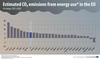 Bulgaria Has Largest Increase of CO2 Emissions in EU in 2021
SOFIA, 24.06.2022 16:32 (BTA) The CO2 emissions from fossil fuels in the EU have increased by 6.3% in 2021 compared to the previous year, according to data from Eurostat published on Friday. Bulgaria had the...
 Trade Unions Leader: Incomes Should Be Compensated with Inflation Percentage
BELCHINSKI BANI, WEST BULGARIA , 13.06.2022 13:45 (BTA) There is no other alternative, regardless what the State is offering, to compensating workers\' and socially disadvantaged group\'s incomes at least with the...
 Bulgaria\'s Total Exports Up 33.6%, Imports 40.5% in January-April, Y/Y
SOFIA, 13.06.2022 12:40 (BTA) In January-April 2022, Bulgaria exported goods worth a total of BGN 28,781.3 million, which is by 33.6% more than in the like period of 2021, show preliminary data released by the...


